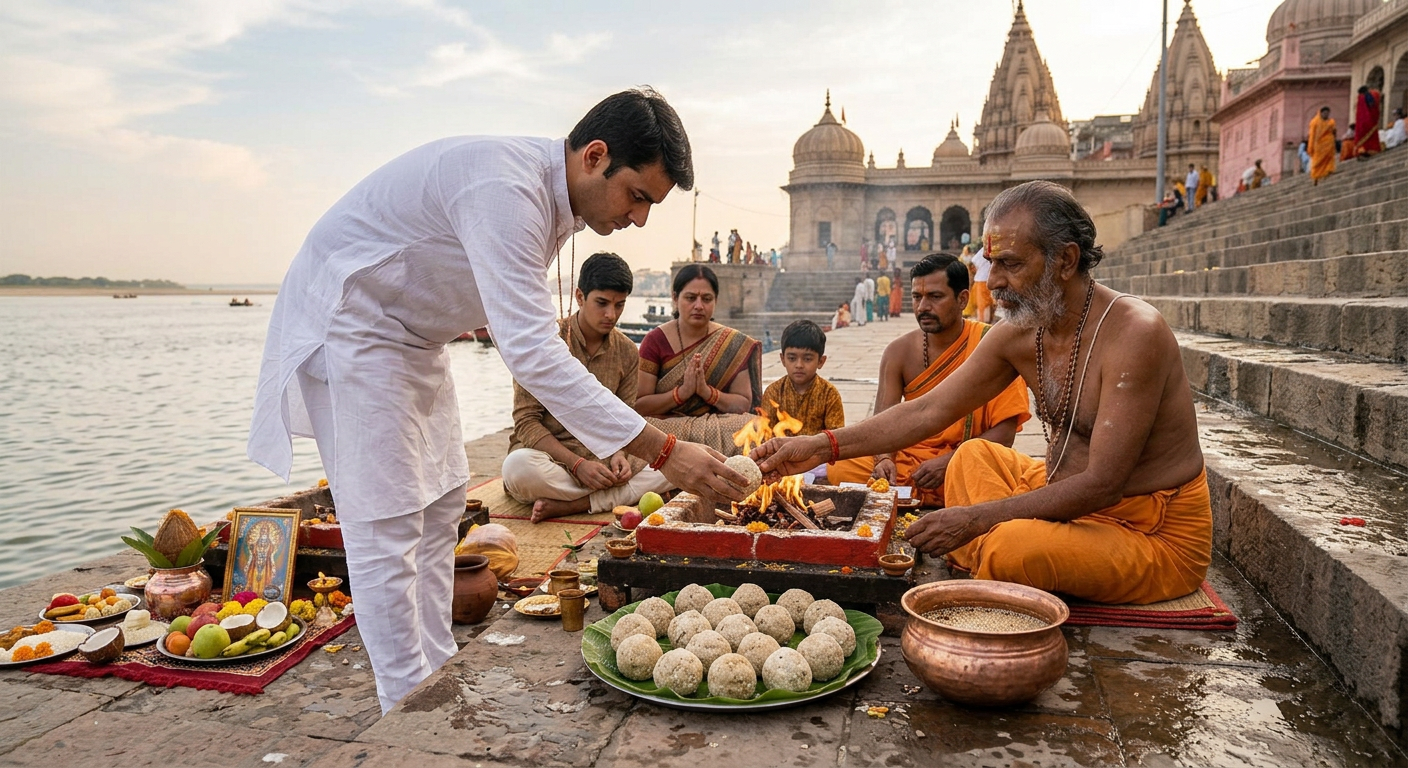
Pind Daan and Tarpan
Pind Daan and Tarpan are important religious rituals performed in Gaya Ji for the ancestors. At sacred places such as Vishnupad Temple and the Falgu River, pindas are offered for the ancestors along with Tarpan, in which water and sesame are offered with prayers and remembrance. According to Hindu religious traditions, performing Shraddha, Pind Daan and Tarpan is considered a way of expressing श्रद्धा and fulfilling one's duties towards the ancestors.
What are Pind Daan and Tarpan?
Pind Daan and Tarpan are ancient Hindu religious traditions performed in remembrance of ancestors.
In Pind Daan, pindas made from ingredients such as rice, flour and sesame are offered in accordance with the prescribed rituals. In Tarpan, water and sesame are offered while remembering and praying for the ancestors.
Why are Pind Daan and Tarpan performed?
According to Hindu religious beliefs, Shraddha, Pind Daan and Tarpan are performed with the prayer for the peace, satisfaction and spiritual well-being of the ancestors. These rituals are also considered a way for descendants to express श्रद्धा, gratitude and respect towards their forefathers and to fulfil their ancestral duties.
Gaya Ji holds special religious significance for Pind Daan, which is why devotees from different parts of India visit Gaya to perform Pind Daan, Tarpan and Shraddha rituals for their ancestors.
“Pind Daan is not only a religious ritual, but also a sacred tradition of remembering one's ancestors with श्रद्धा and expressing gratitude towards them.”
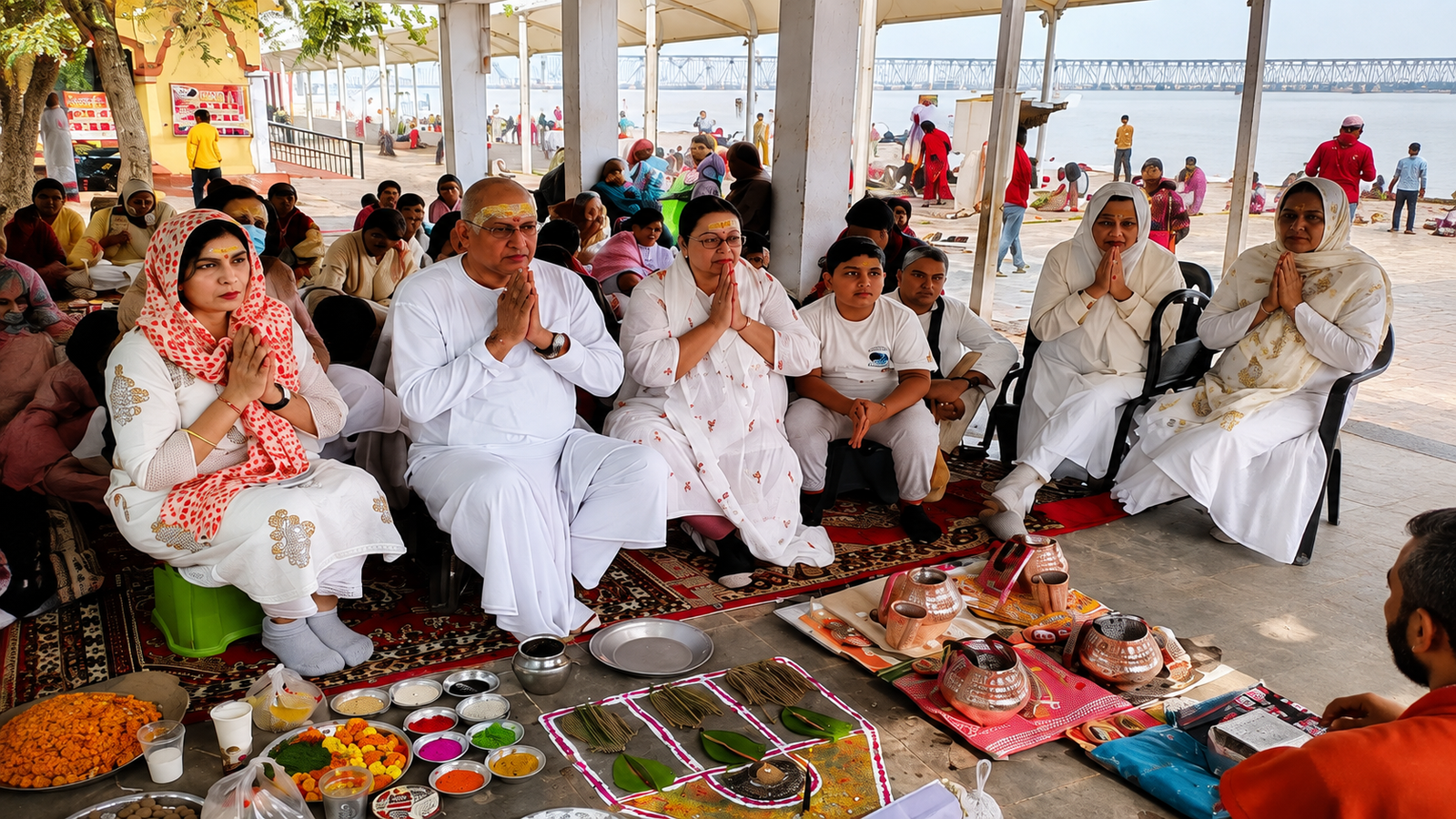
Tripindi Shradh
According to Hindu religious beliefs, Tripindi Shradh is an important ancestral ritual performed for the peace and spiritual well-being of departed ancestors. It is traditionally believed that through this ritual, prayers are offered for the departed soul to attain spiritual progression from the Preta Yoni towards the Pitru Yoni.
Tripindi Shradh is performed especially for three generations — father, grandfather, and great-grandfather, with pind offerings made in their remembrance. The ritual is performed with devotion and prayers for the satisfaction, peace, and spiritual well-being of the ancestors.
In families where there is a religious belief associated with Pitru Dosha, or where the date or details of an ancestor's death are not known, Tripindi Shradh is traditionally performed. According to religious beliefs, this ritual is considered beneficial for seeking peace, harmony, prosperity, and spiritual well-being for the family.
Why is Tripindi Shradh Performed?
- For prayers for the spiritual progression from Preta Yoni towards Pitru Yoni
- For the satisfaction and peace of three generations of ancestors
- As a traditional ritual associated with Pitru Dosha
- For prayers for peace, harmony, and prosperity in the family
“Tripindi Shradh is an important Hindu religious tradition performed to respectfully remember one's ancestors, pray for their peace and spiritual well-being, and fulfill one's traditional responsibilities towards the ancestral lineage.”
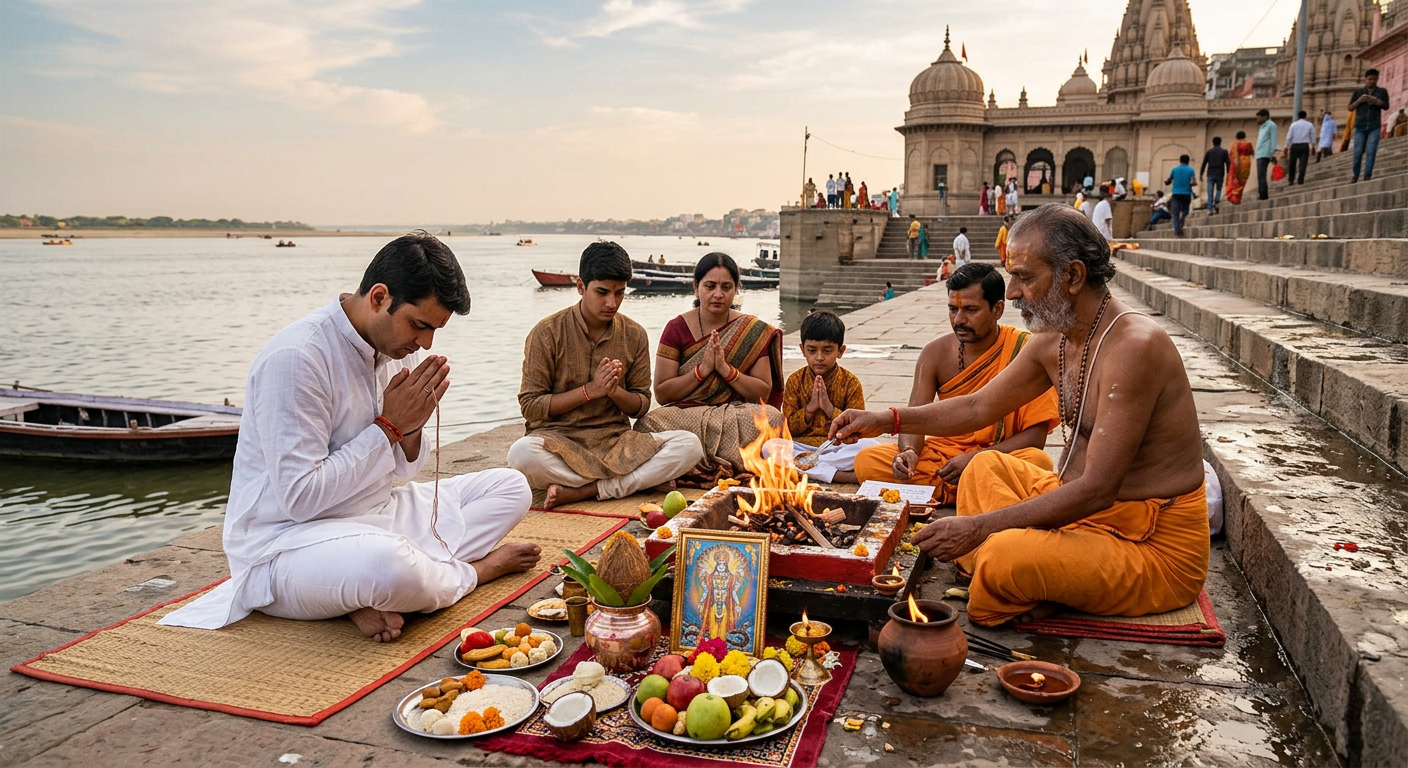
Narayan Bali Puja
Narayan Bali is a special Hindu religious ritual performed for a person who passed away due to an untimely death, accident, or other unusual circumstances, with prayers for their peace and spiritual well-being. According to Hindu religious beliefs, this ritual includes the worship of Lord Narayan, a form of Lord Vishnu, along with specific religious ceremonies.
The purpose of this puja is to express respect and devotion towards the departed soul and to pray for their peace, spiritual well-being, and liberation. Narayan Bali is performed under the guidance of a qualified Acharya, along with Sankalp, worship, mantra chanting, and prescribed religious rituals.
Depending on the family's religious traditions and the guidance of the Acharya, Tripindi Shradh or other ancestral rituals may also be performed along with Narayan Bali. The appropriate ritual is determined according to the family's circumstances, religious tradition, and Sankalp.
Why is Narayan Bali Puja Performed?
- A special religious ritual performed for a person who experienced an untimely or unusual death
- Performed with the worship and devotion of Lord Narayan
- With prayers for the peace and spiritual well-being of the departed soul
- A way for the family to fulfill their devotional and traditional responsibilities towards the departed
“Narayan Bali Puja is a special Hindu religious tradition performed with the worship of Lord Narayan and prescribed rituals, with prayers for the peace and spiritual well-being of the departed soul.”
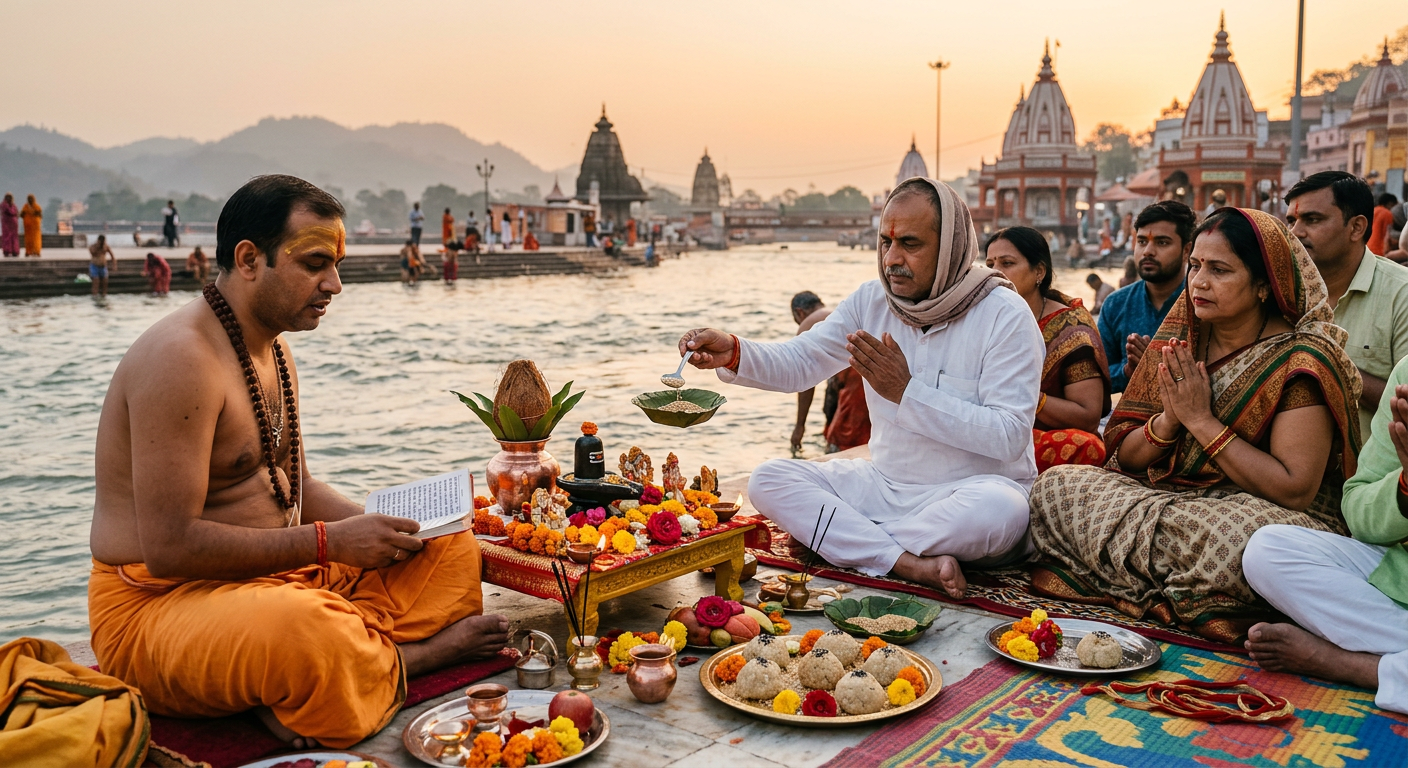
Pitru Dosha Nivaran Puja
Pitru Dosha Nivaran Puja is a special Hindu religious ritual performed with devotion towards ancestors and prayers for their peace and spiritual well-being. According to Hindu astrology and religious beliefs, the presence of Pitru Dosha in a birth chart is traditionally associated with various challenges in life. In such circumstances, Pitru Dosha Nivaran Puja is performed as a traditional religious remedy.
This puja includes Sankalp, ancestral worship, mantra chanting, Havan, and other prescribed religious rituals performed under the guidance of an Acharya. Its primary purpose is to pray for the peace and satisfaction of the ancestors, family well-being, and peace and harmony in life.
If Pitru Dosha has been identified in a birth chart by a qualified astrologer, the family may undertake this puja according to their religious traditions and the guidance of an Acharya. The specific rituals and procedures are determined according to the family's circumstances and Sankalp.
Why is Pitru Dosha Nivaran Puja Performed?
- Performed as a traditional religious ritual associated with Pitru Dosha
- With prayers for the peace and satisfaction of the ancestors
- Performed with Havan, mantra chanting, and prescribed religious rituals
- With prayers for peace, harmony, and well-being in the family
“Pitru Dosha Nivaran Puja is an important Hindu religious ritual performed to express devotion towards ancestors and to pray for their peace, along with the happiness, harmony, and well-being of the family.”
Rudra Abhishek Puja
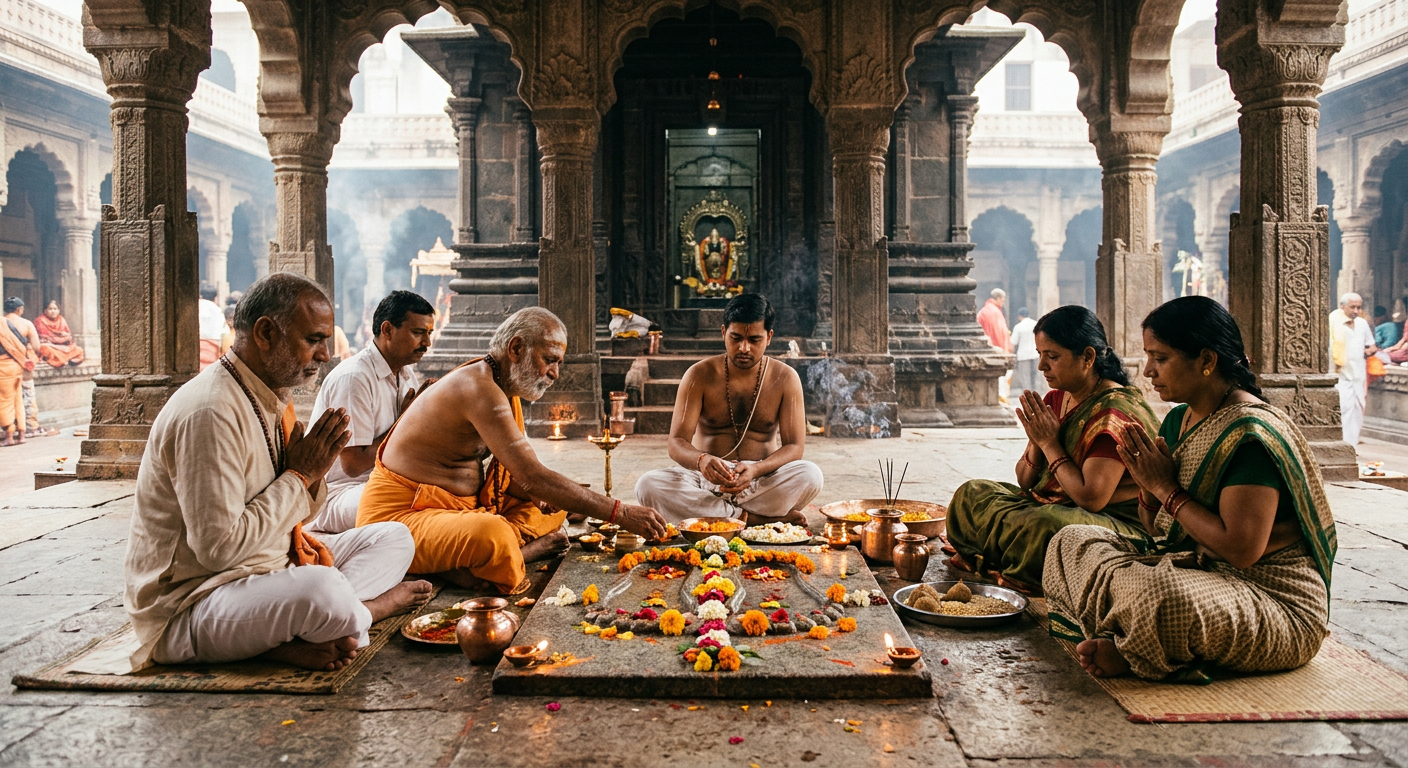
Rudra Abhishek is an important Hindu religious ritual performed as an act of devotion to Lord Shiva and with prayers for His blessings. During the ritual, the Shiva Lingam is ceremonially bathed with water, milk, curd, honey, Panchamrit, and Gangajal, accompanied by the chanting of sacred mantras. In Gaya Ji, devotees perform Rudra Abhishek according to their religious faith and Sankalp.
The purpose of Rudra Abhishek is to seek the blessings of Lord Shiva, peace and harmony within the family, and overall prosperity. Devotees who perform this ritual along with ancestral rites may also offer prayers for the peace of their ancestors and the spiritual well-being of their family.
According to Hindu religious and astrological beliefs, Rudra Abhishek is also considered among the traditional religious practices performed for planetary peace and relief from various challenges in life. The specific procedure and Sankalp are determined according to the individual's or family's religious traditions under the guidance of an Acharya.
Why is Rudra Abhishek Performed?
- With prayers for the worship and blessings of Lord Shiva
- Traditional Abhishek with water, milk, Panchamrit, and Gangajal
- With prayers for peace, harmony, and prosperity in the family
- According to religious beliefs, with prayers for planetary peace and relief from various challenges
“Rudra Abhishek is a sacred Hindu religious ritual performed with devotion to Lord Shiva and prayers for His blessings, family peace, prosperity, and spiritual well-being.”
Shradh Karma in Gaya Ji
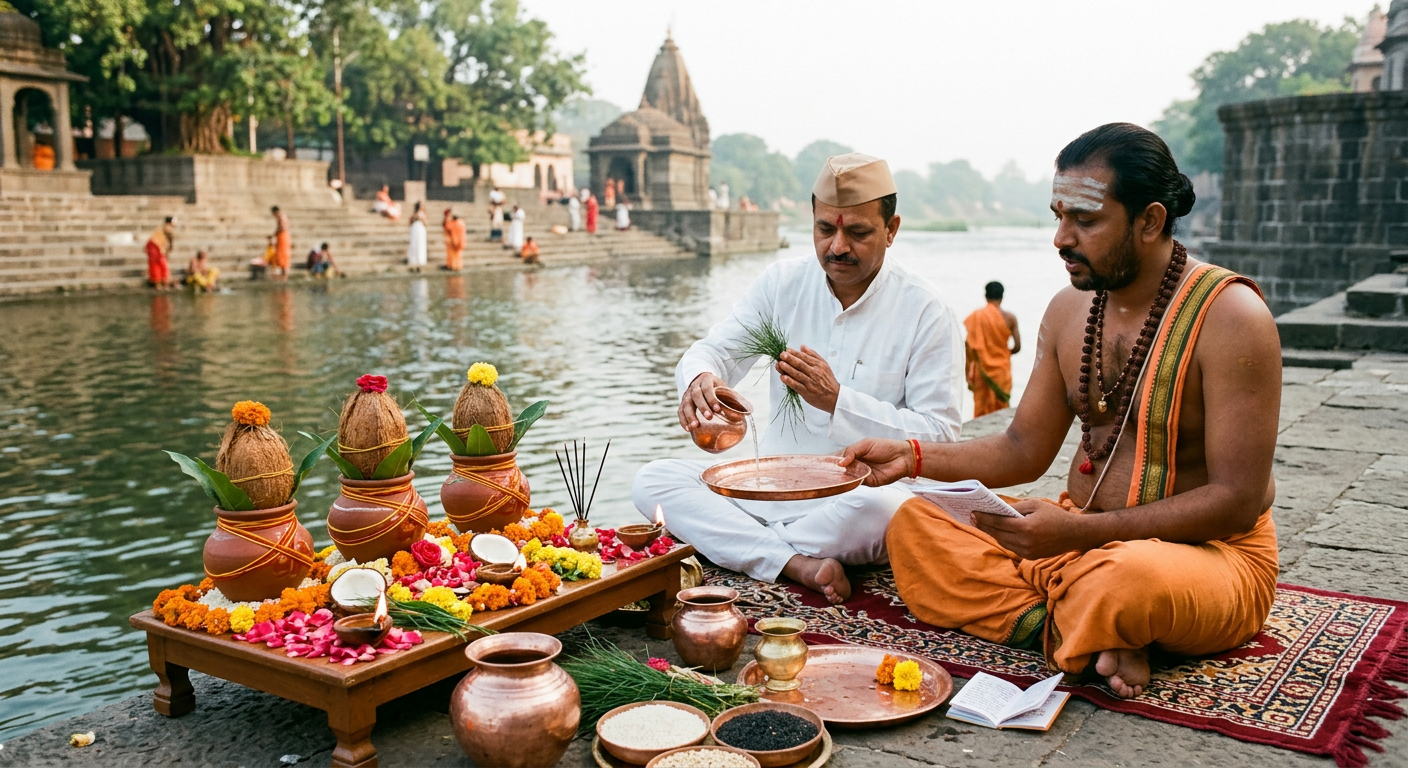
Shradh Karma in Gaya Ji is an important Hindu religious ritual performed to express devotion, remembrance, and gratitude towards one's ancestors. On the death anniversary, during annual Shradh, or on a date prescribed according to family traditions, Sankalp, Pind Daan, Tarpan, and other prescribed Shradh rituals are performed for the ancestors according to traditional Hindu practices. Gaya Ji is traditionally regarded as an important pilgrimage destination for performing Shradh and Pind Daan for departed ancestors.
During Shradh Karma, ancestors are respectfully remembered through Pind offerings, Tarpan, Sankalp, and prescribed worship rituals. Depending on the family's traditions and the requirements of the Yajman, the specific procedures and rituals are performed under the guidance of an Acharya. When required, guidance regarding Brahmin Bhoj and other religious arrangements can also be provided.
Shradh Karma in Gaya Ji is performed with prayers for the peace, satisfaction, and spiritual well-being of departed ancestors. The rituals can also be performed according to special Shradh occasions such as Panchami, Navami, Matru Shradh, and other significant dates. For the appropriate date, Sankalp, and ritual procedure, it is advisable to seek guidance from an Acharya according to the family's traditions and religious beliefs.
Why is Shradh Karma Performed in Gaya Ji?
- To express devotion and gratitude towards one's ancestors
- To respectfully remember ancestors through Pind Daan and Tarpan
- To perform annual Shradh and death anniversary rituals according to traditional practices
- With prayers for the peace, satisfaction, and spiritual well-being of ancestors
“Shradh Karma in Gaya Ji is an important Hindu religious tradition performed to express devotion and gratitude towards one's ancestors and to pray for their peace, satisfaction, and spiritual well-being.”